

Powder sunscreen works well for kids, and for many families it becomes the format that makes sun protection most practical and consistent. Here's how it works, how to apply it well, and what to look for when choosing one.
How Powder Sunscreen Works
Mineral sunscreens use mineral UV filters — zinc oxide, titanium dioxide, or a combination of both — to provide broad-spectrum UVA and UVB protection. BOB KIDS Mineral Powder Sunscreen is formulated with zinc oxide only.
Zinc oxide works by scattering and absorbing UV rays at the skin's surface. Because it doesn't need to be absorbed to work, it's a gentle option for kids whose skin is more sensitive or reactive, and it's the choice we made deliberately for every product in the BOB KIDS line.
Why Powder Works Well for Kids
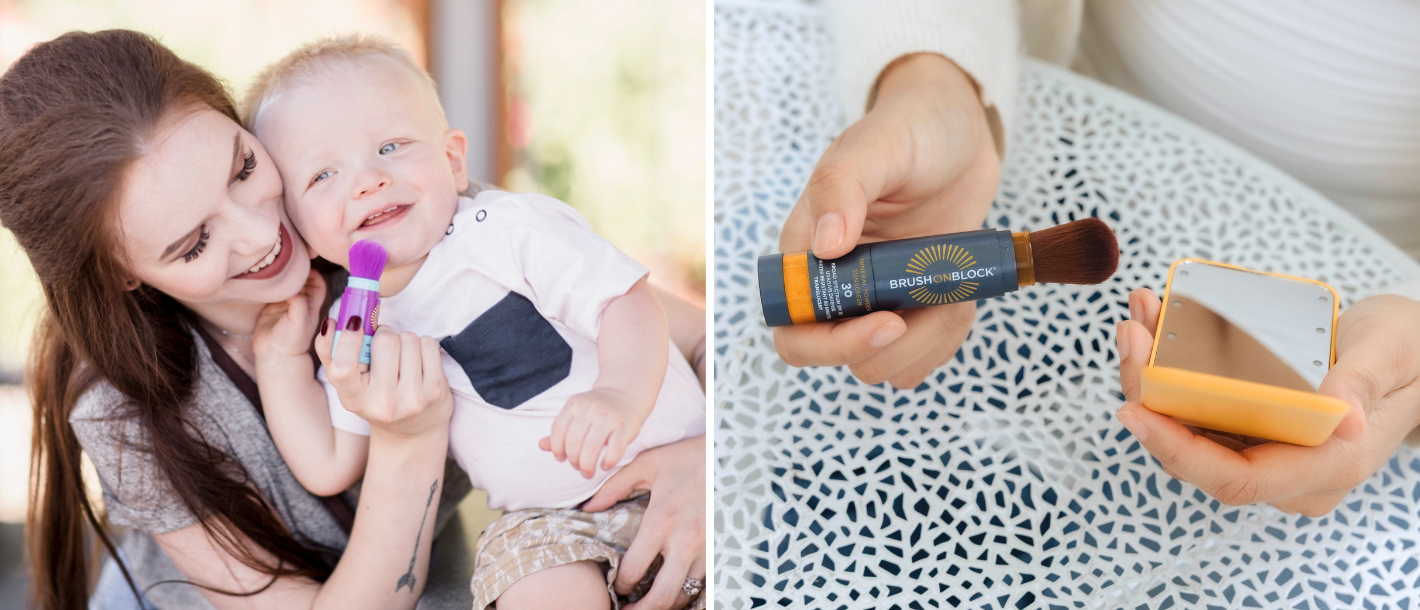
The brush-on format has a few practical advantages that make it a good fit for kids' daily routines. The brush gives you controlled, targeted coverage — it's easy to work into the hairline, around the ears, and across the nose without the spreading and rubbing that lotion requires on a squirmy kid. The application is quick, and kids often find the brush format more tolerable than lotion.
Powder is also well-suited to reapplication throughout the day. It's compact enough to keep in a bag, a locker, or a pool deck tote, and the brush-on application works wherever you are, making it practical to reapply at school, at practice, or on the water without a big production.

To apply BOB KIDS mineral powder sunscreen, buff in small circles for even coverage, paying extra attention to the hairline, ears, and nose.
How to Apply Powder Sunscreen on Kids
Technique matters with powder sunscreen. The goal is even, liberal coverage — the same standard that applies to any sunscreen.
Apply in small circular motions, buffing the powder into the skin as you go. Cover the full face, ears, neck, and any other exposed skin. A thorough application takes about 60 seconds. Pay attention to the hairline, the bridge of the nose, and the tops of the ears, which are easy to overlook.
For younger children, parents should do the application and check for full coverage before sending kids out the door. For older children, the brush format is simple enough that they can start applying it themselves, with a parent checking to make sure everything is covered.

Easy to pack, quick to apply, and simple to reapply, BOB Kids helps make sunscreen a more consistent part of everyday adventures.
Reapplication: Where Powder Earns Its Place
Sunscreen needs to be reapplied every two hours during outdoor activity and immediately after swimming or heavy sweating. This is where the powder format is especially practical.
The brush travels easily, applies quickly to exposed skin, and doesn't leave sticky hands or require any cleanup afterward. For families getting kids out the door on school days, to the park, or to practice, that ease of reapplication makes it far more likely to happen consistently.
Consistent reapplication is what makes sunscreen effective. A format that makes it easy to reapply is a format that gets reapplied.
What to Look for in a Powder Sunscreen for Kids
Not all powder sunscreens are the same. For kids specifically, look for zinc oxide as the UV filter, broad-spectrum protection, water resistance, and a formula without unnecessary additives. Zinc oxide is the gentlest mineral UV filter and the one most often recommended for sensitive or reactive skin.
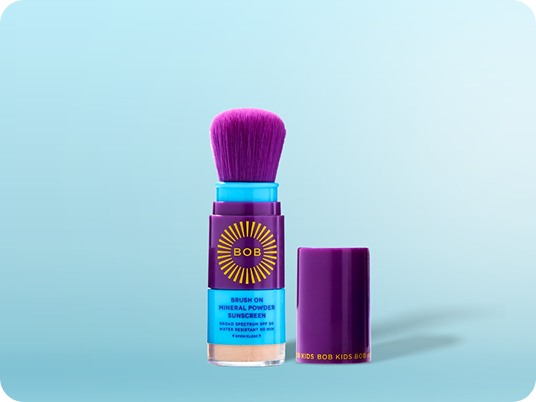
BOB KIDS Mineral Powder Sunscreen is formulated with zinc oxide only, broad-spectrum, and water resistant for 80 minutes. It's reef friendly, with no oxybenzone or octinoxate, and designed to be easy enough for kids to use consistently.

Zinc oxide-only protection, broad-spectrum coverage, and 80-minute water resistance make BOB Kids a practical choice for everyday sun protection.
FAQ
Does powder sunscreen work as well as lotion for kids?
Yes, when applied correctly and liberally. Powder sunscreen uses the same mineral UV filters as lotion-based mineral sunscreens, and the protection is equivalent when coverage is thorough. The key is taking the time to cover all exposed skin, including easy-to-miss spots like the ears and hairline.
How do you apply powder sunscreen to kids?
Apply in small circular motions, buffing the powder into the skin as you go. Cover the face, ears, neck, and any exposed skin, and plan for about 60 seconds per application. For younger children, parents should apply and check coverage. For older kids, the brush format is simple enough to use themselves with a parent checking their work.
Can you use powder sunscreen on a baby or toddler?
For babies and toddlers, consult your pediatrician for guidance on the right sunscreen format for their age and skin. Generally, the American Academy of Pediatrics recommends keeping infants under six months out of direct sun, and for older babies and toddlers, mineral sunscreen is the recommended choice. A parent should always apply and oversee the process for young children.
How often should you reapply powder sunscreen on kids?
Every two hours during outdoor activity, and immediately after swimming or heavy sweating. Apply liberally each time and make sure ears, neck, and hard-to-reach spots are covered.
Is BOB KIDS powder sunscreen reef friendly?
Yes. BOB KIDS Mineral Powder Sunscreen contains no oxybenzone or octinoxate, the chemical UV filters most associated with coral reef impact. It's a reef friendly choice for beach and water days.