

Both mineral and chemical sunscreens can protect your kids from the sun. The question worth asking is which one your child and your family will use consistently enough to matter.
How the Two Types Work Differently
Chemical sunscreens use synthetic UV filters that are absorbed into the skin, where they convert UV rays into heat. They tend to be lightweight and easy to spread, and they've been widely used for decades.
Mineral sunscreens use mineral UV filters (zinc oxide, titanium dioxide, or both) that sit on top of the skin and scatter and absorb UV rays before they penetrate. Because the active ingredients work from the surface rather than being absorbed, they're a gentler option for skin that's more sensitive or reactive.
For most kids, either type provides effective broad-spectrum protection when applied correctly and reapplied consistently. But there are a few reasons parents often prefer mineral for children.

For many families, mineral sunscreen is a gentler option for kids with sensitive or reactive skin.
Why Many Parents Choose Mineral for Kids
Kids' skin is more sensitive and still developing, which makes the surface-level action of mineral sunscreens a natural fit. Zinc oxide in particular is the gentlest UV filter available and the one most commonly recommended for babies, toddlers, and children with reactive or sensitive skin.
Chemical UV filters are also more commonly associated with skin reactions and eye stinging, two things that make sunscreen application harder for kids and parents alike. If your child has resisted sunscreen in the past, the formula may be part of the reason.
There's also the environmental angle. Zinc oxide and titanium dioxide are reef-friendly, with no oxybenzone or octinoxate, the chemical UV filters most associated with coral reef impact. For families spending time near the water, that's a meaningful consideration.

Zinc-Only vs. Zinc and Titanium Dioxide
Within mineral sunscreens, there's a further distinction worth knowing. Some mineral formulas use both zinc oxide and titanium dioxide as UV filters. Others use zinc oxide only.
Zinc oxide alone provides broad-spectrum UVA and UVB protection and is the gentlest of the two mineral actives. Formulas that combine zinc oxide with titanium dioxide can reach higher SPF levels, but for everyday kids' sunscreen, zinc-only is the gentler option.
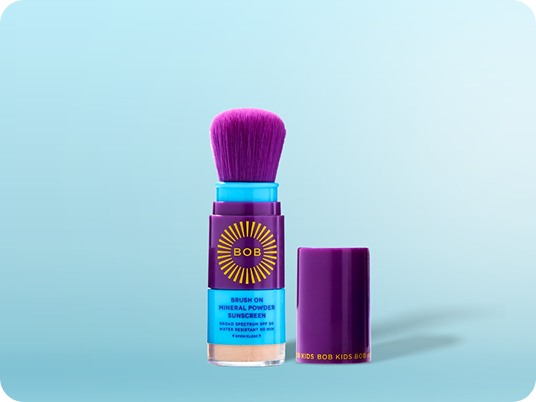
BOB KIDS Mineral Powder Sunscreen uses zinc oxide only, with no titanium dioxide and no chemical UV filters. It's the choice we made because it gives kids the broadest protection with the gentlest formula.

BOB KIDS Mineral Powder Sunscreen uses zinc oxide only for broad-spectrum protection with a gentle mineral formula.
The Most Important Factor: Consistent Use
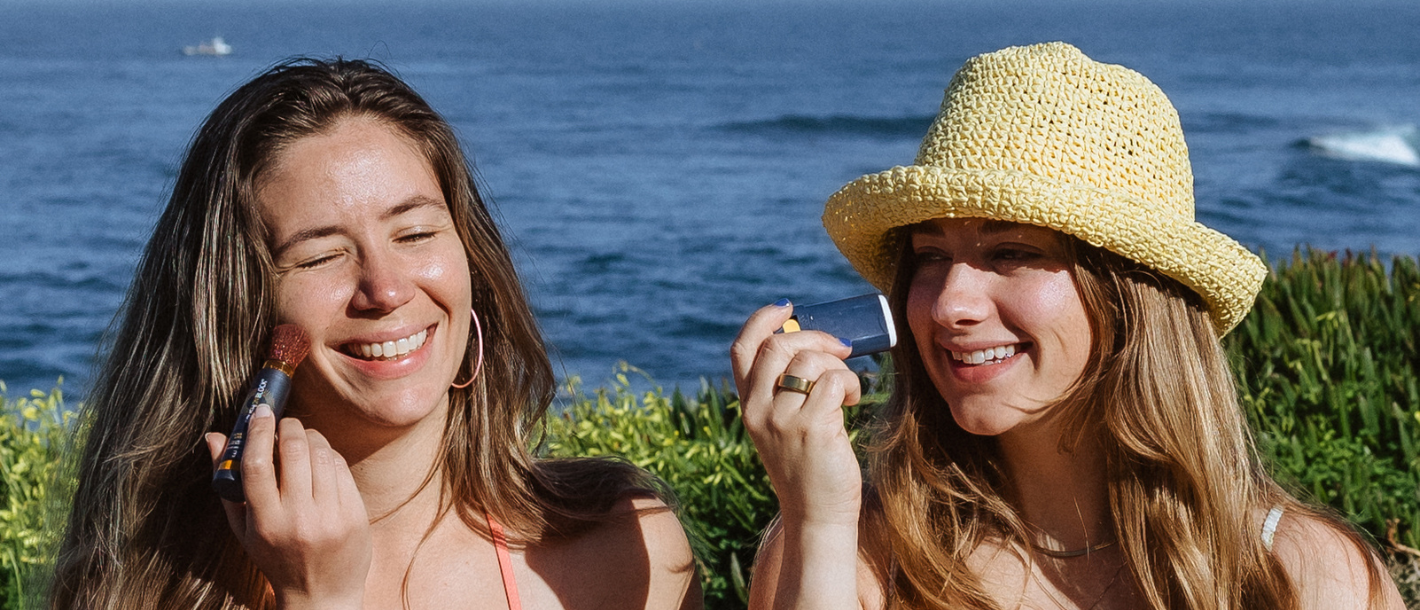
The best sunscreen for your kids is the one they'll wear and reapply. A high-SPF formula that gets skipped at the pool or resisted at school drop-off doesn't protect anyone. A mineral powder that kids can apply themselves, or that parents can apply quickly without a fight, does the job because it gets used.
For younger children, parents apply it and the routine builds from there. For older kids, a format they can manage themselves helps establish a sun protection habit that stays with them. That consistency is what makes sunscreen work in real life.
FAQ
Is mineral sunscreen safer than chemical sunscreen for kids?
Both mineral and chemical sunscreens are considered safe for children by the FDA when used as directed. Mineral sunscreens, particularly zinc oxide, are often preferred for younger children and those with sensitive or reactive skin because the active ingredients work on the skin's surface rather than being absorbed. For children 6 months and older, either type can be effective.
What age can kids start using mineral sunscreen?
Per FDA guidelines, sunscreen can be used on children 6 months and older. For infants under 6 months, the recommendation is to keep them out of direct sun and use protective clothing rather than sunscreen. Always check with your pediatrician if you have questions about your child's specific skin needs.
Is zinc oxide sunscreen better for kids with sensitive skin?
Zinc oxide is generally the recommended choice for children with sensitive or reactive skin. It's the gentlest UV filter available, works without being absorbed into the skin, and is less likely to cause reactions than chemical UV filters. A zinc-only formula with no fragrance and no chemical sunscreen actives is the gentlest option for reactive skin.
Why does BOB KIDS use zinc oxide only?
We chose a zinc-only formula because zinc oxide alone provides broad-spectrum UVA and UVB protection and is the gentlest mineral UV filter available. A zinc-only formula is also gentler for sensitive or reactive skin and avoids any of the concerns some parents have about titanium dioxide. It's the same standard we apply to ourselves.
Does mineral sunscreen leave a white cast on kids?
Mineral sunscreen formulas have come a long way. Earlier versions, particularly lotions with high zinc oxide concentrations, were known for leaving a white cast. Modern formulations are significantly improved. BOB KIDS Mineral Powder Sunscreen is formulated to apply translucent on most skin tones, without the white residue associated with older mineral sunscreens, making it more comfortable and easier for kids to wear consistently.